Direct Answer
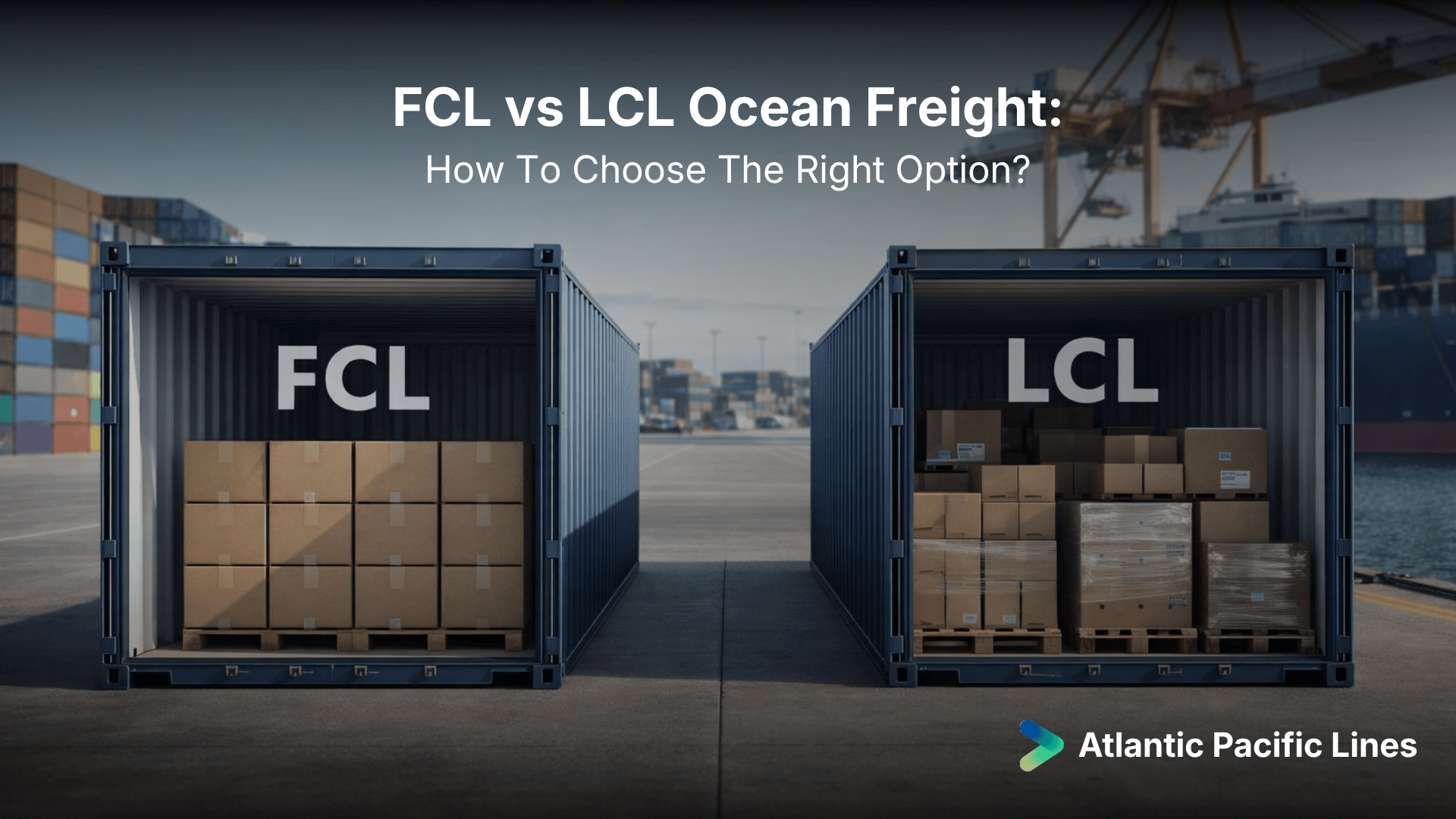
FCL (Full Container Load) means your cargo occupies an entire shipping container exclusively. LCL (Less than Container Load) means your cargo is consolidated with other shippers' goods inside a shared container.
- FCL is more cost effective for shipments above approximately 15 CBM.
- LCL suits smaller volumes where paying for a full container is not economical.
- The right choice depends on your volume, urgency, cargo sensitivity, and total cost priorities.
Key Takeaways
- FCL gives you exclusive use of a container. LCL puts your cargo in a shared container alongside other shippers' freight.
- FCL becomes more cost effective than LCL at approximately 15 CBM for a 20 foot container and 25 CBM for a 40 foot container, though this varies by trade lane and season.
- LCL adds consolidation and deconsolidation handling at both ends of the journey, increasing transit time by 3 to 7 days compared to FCL.
- FCL is the better choice for cargo that is fragile, high value, time sensitive, or temperature controlled.
Introduction
The choice between FCL and LCL is one of the first decisions every importer and exporter faces when planning an ocean shipment. It is also one of the most consequential, because getting it wrong in either direction costs money.
Choosing FCL when your volume does not justify it means paying for empty container space. Choosing LCL when your cargo is fragile, time sensitive, or approaching the FCL cost threshold means paying a premium for slower service with higher handling exposure.
This guide provides a complete, decision oriented breakdown of FCL vs LCL ocean freight, including: cost comparison logic, a breakeven volume calculator framework, use case analysis, and step by step process comparison. Atlantic Pacific Lines provides both options across all major trade lanes and its instant rate search platform allows shippers to ascertain FCL quotes before committing to a booking.
Definitions: What FCL and LCL Actually Mean
Before comparing the two options, it is important to be precise about what each term describes.
What Is FCL (Full Container Load)
FCL, or Full Container Load, is an ocean freight arrangement in which a single shipper books an entire shipping container for the exclusive use of their cargo. The container is loaded at the shipper's facility or at an inland container depot, sealed, and transported to the destination port without being opened or consolidated with any other shipment. FCL containers are loaded and delivered intact.
The term Full Container Load is somewhat misleading. It does not mean the container must be physically full. A shipper booking FCL pays for the entire container regardless of how much of its capacity is used. If your cargo fills only half a 20 foot container, you still book and pay for the full container under FCL terms.
FCL is the standard service type in ocean freight forwarding for shipments large enough to justify exclusive container use. Atlantic Pacific Lines provides FCL services across all major trade lanes with carrier partnerships that provide consistent space allocation and competitive contract rates.
What Is LCL (Less than Container Load)
LCL, or Less than Container Load, is an ocean freight arrangement in which a shipper's cargo occupies only a portion of a shipping container. The remaining space is filled with other shippers' cargo. The freight forwarder or consolidator combines multiple LCL shipments from different shippers into a single FCL container, transports the container to the destination port, then breaks it down and distributes individual shipments to their respective consignees.
The facility where cargo is packed into a shared container is called a Container Freight Station (CFS) at origin. The facility where the container is unpacked at destination is also called a CFS. LCL shippers pay only for the space their cargo occupies, measured in cubic meters (CBM) or weight depending on carrier rules.
How FCL and LCL Pricing Work
Understanding how each option is priced is essential to making an accurate cost comparison. FCL and LCL follow completely different pricing structures. The cheaper option depends entirely on cargo volume.
How FCL Pricing Is Structured
FCL pricing is quoted as a flat rate per container, covering ocean freight from port of loading to port of discharge. Standard container sizes include: 20 foot container (1 TEU), 40 foot container (2 TEU). Additional surcharges may include: Bunker Adjustment Factor (BAF), Currency Adjustment Factor (CAF), Peak Season Surcharge (PSS), Terminal Handling Charge (THC), and documentation fees. Because FCL pricing is flat per container, the cost per CBM decreases as cargo volume increases.
How LCL Pricing Is Structured
LCL pricing is quoted per cubic meter (CBM) or per metric tonne, whichever is higher. Typical charges include: ocean freight rate per CBM, CFS consolidation charges, CFS deconsolidation charges, documentation fees, and proportional surcharges such as BAF and CAF. LCL rates vary significantly by trade lane, cargo type, and consolidation frequency.
The Breakeven Point: When FCL Becomes Cheaper than LCL
The breakeven point is the cargo volume where FCL total cost equals LCL total cost. Above this point: FCL becomes cheaper. Below this point: LCL is cheaper.
| Container Type | Approximate Breakeven Volume |
|---|---|
| 20 foot container | 12 to 15 CBM |
| 40 foot container | 22 to 28 CBM |
| 40 foot High Cube | 25 to 30 CBM |
These numbers vary by trade lane, seasonal surcharges, CFS handling costs, and market rate levels.
How to Calculate Your Breakeven Point
Divide total FCL container cost by container capacity. Compare the resulting cost per CBM with LCL rate per CBM. When LCL cost exceeds FCL cost, FCL becomes cheaper.
FCL vs LCL: Transit Time Comparison
Transit time is a critical factor for many shippers. FCL and LCL differ significantly in processing steps.
| Stage | FCL | LCL |
|---|---|---|
| Origin pickup | Direct loading | Delivered to CFS |
| Consolidation | Not required | 2 to 4 days |
| Ocean transit | Same vessel | Same vessel |
| Destination handling | Direct delivery | CFS deconsolidation |
| Additional transit time | Baseline | 3 to 7 extra days |
For time sensitive shipments, FCL avoids consolidation delays.
Cargo Safety and Risk Comparison
Cargo handling risk depends largely on the number of times cargo is physically handled. More handling means higher exposure to damage, moisture, contamination, and pilferage.
FCL Cargo Handling Profile: Under FCL, cargo is loaded once at origin, the container is sealed, and the container remains unopened until delivery. Handling exposure is therefore minimal. This makes FCL ideal for high value goods, fragile cargo, electronics, and machinery.
LCL Cargo Handling Profile: Under LCL cargo is handled multiple times: delivery to origin CFS, loading into consolidated container, unloading at destination CFS, delivery to consignee. If transshipment occurs, another handling stage may occur. Each stage introduces additional risk.
Cargo Type and Recommended Mode
| Cargo Type | Recommended Mode |
|---|---|
| High value cargo | FCL |
| Fragile cargo | FCL |
| Temperature controlled cargo | FCL reefer |
| Dangerous goods | FCL |
| General cargo under 10 CBM | LCL |
| General cargo 10 to 15 CBM | Compare both |
| General cargo above 15 CBM | FCL |
Container Types Available for FCL
| Container Type | Typical Use |
|---|---|
| 20 foot general container | Heavy cargo |
| 40 foot general container | High volume cargo |
| 40 foot high cube | Extra height cargo |
| Reefer containers | Temperature sensitive goods |
| Flat rack | Oversized cargo |
| Open top | Crane loaded machinery |
The LCL Consolidation Process
Typical LCL workflow:
-
1
Shipper delivers cargo to origin CFS
-
2
Cargo verified and assigned house bill of lading
-
3
Consolidator combines shipments into container
-
4
Container shipped to destination
-
5
Container delivered to destination CFS
-
6
Cargo unpacked and sorted
-
7
Customs clearance processed
-
8
Cargo released for pickup
The FCL Shipping Process
Typical FCL workflow:
-
1
Shipper books container through freight forwarder
-
2
Empty container positioned for loading
-
3
Cargo loaded and container sealed
-
4
Verified Gross Mass submitted
-
5
Export documentation prepared
-
6
Container delivered to port terminal
-
7
Container loaded onto vessel
-
8
Container transported to destination
-
9
Container delivered intact to consignee
Customs Clearance for FCL vs LCL
| Customs Factor | FCL | LCL |
|---|---|---|
| Entry filing | Single entry | Individual entries |
| ISF filing | One filing | Multiple filings |
| Examination risk | Container level | Shared container risk |
| Duty assessment | Full shipment | Individual cargo |
A key LCL risk is that if one shipment is flagged for inspection, all shipments in that container may be delayed.
Cargo Insurance Considerations
Carrier liability is limited under international conventions. Typical limits are far below cargo value. Recommended coverage: All risk cargo insurance and commercial value coverage. LCL shipments generally require higher insurance protection due to additional handling exposure.
FCL vs LCL Decision Framework
Choose FCL When: cargo volume exceeds breakeven point; cargo is high value or fragile; cargo requires temperature control; cargo is dangerous goods; cargo is oversized or out of gauge; shipment is time sensitive.
Choose LCL When: cargo volume is below breakeven threshold; shipment volume is small; cargo is general merchandise; delivery timeline is flexible.
Trade Lane Considerations
LCL availability depends heavily on route density.
| Trade Lane | LCL Frequency | Recommendation |
|---|---|---|
| Asia to USA | High | LCL under 15 CBM |
| USA to Europe | High | LCL under 14 CBM |
| USA to Middle East | Moderate | LCL under 12 CBM |
| USA to South America | Moderate | Depends on port |
How Atlantic Pacific Lines Manages FCL and LCL Shipments
Atlantic Pacific Lines is an FMC registered NVOCC providing both FCL and LCL services across major global trade lanes. Capabilities include: carrier contract rates, house bill of lading issuance, integrated customs clearance, cargo insurance arrangements, real time shipment tracking, and instant freight rate search platform.
Frequently Asked Questions
Summary
FCL vs LCL Core Decision Points:
- FCL provides exclusive container use.
- LCL consolidates cargo with other shipments.
- FCL becomes cost effective above 12 to 15 CBM on most lanes.
- LCL adds 3 to 7 days of additional transit time due to CFS consolidation.
- FCL is preferred for fragile, high value, dangerous goods, or temperature controlled cargo.
- LCL is ideal for small volume shipments where cost efficiency outweighs speed.
Get FCL and LCL quotes with Atlantic Pacific Lines.
Use our instant rate search platform to compare options, or speak with our team to plan the right solution for your volume and cargo type.
Contact Us Today